Sugar Defender Review: Ingredients, Doses and Whether It Works
Liquid blood sugar drops with 22 botanicals and amino acids in a 200 mg blend, plus a trace of chromium
Our verdict
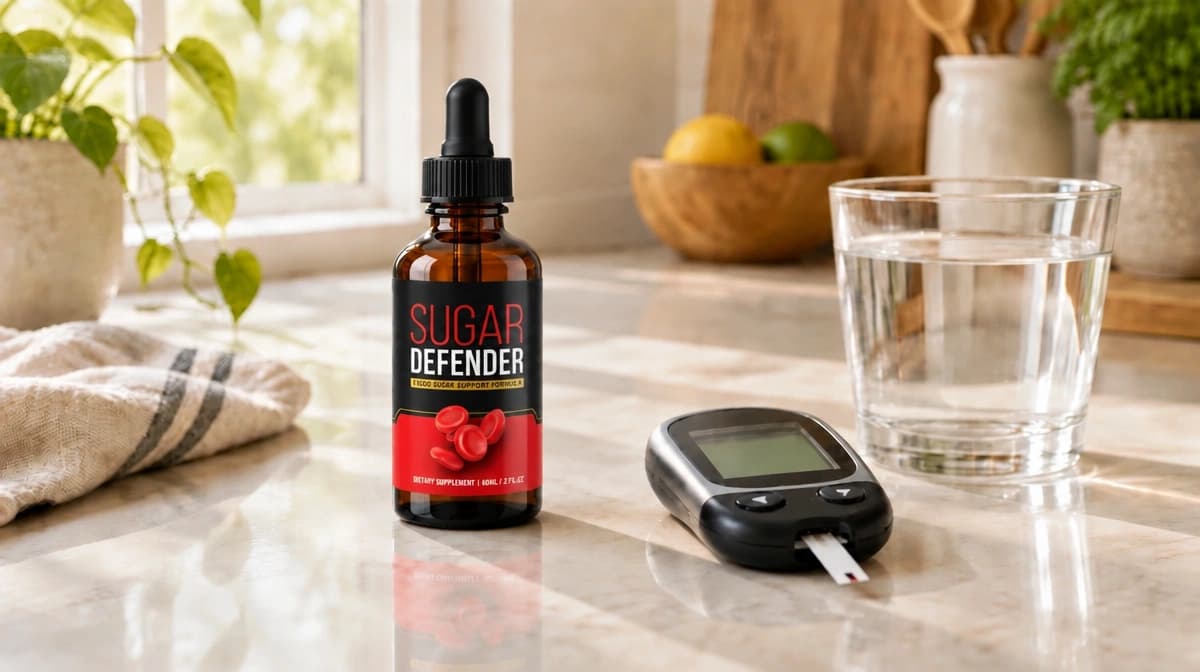
Sugar Defender's label is unusually complete for this category, and that is the problem: it discloses that the whole herbal blend is 200 mg a day shared between 22 ingredients, and that the chromium dose is 0.7 mcg, about 2 percent of the daily value and roughly 300 times below the lowest dose used in the chromium trials the vendor cites. Gymnema, ginseng, green tea, African mango and L-carnitine all have human glucose data, but every one of them was studied at hundreds of milligrams to several grams a day, and no single ingredient in a 200 mg blend can reach that. It does not contain berberine. If you want a supplement with a plausible dose, a plain gymnema or berberine product with the milligrams on the label is the better buy.
- Best for
- Someone who wants a low-dose liquid with a long ingredient list, understands the doses are far below the trial range, and is already doing the things that move fasting glucose (post-meal walks, less refined carbohydrate, sleep).
- Skip it if
- You take metformin, insulin or a sulfonylurea, are sensitive to caffeine (guarana and green tea), have high blood pressure (licorice-derived glycyrrhizinate at an unknown dose), or you expect any ingredient at the dose the studies used.
Form
Liquid drops, 1 ml daily (60 ml bottle, 60 servings on the label)
Price
$69 per bottle in the 2- and 3-bottle packs, $49 per bottle in the 6-bottle pack (order page, September 2026)
Guarantee
60-day money-back guarantee
Ingredients: label dose versus trial dose
This is the table every supplement review should have and almost none do. The middle column is what the label discloses. The right column is what the human trials used. When the label says nothing, we say so.
| Ingredient | On the label | Dose used in trials | Evidence |
|---|---|---|---|
| Chromium (as chromium picolinate) The one ingredient with a disclosed dose, and it is about 0.07 percent of the 1,000 mcg that worked in the trial the vendor cites. A 2007 systematic review found an HbA1c reduction of 0.6 points in diabetics at trial doses and no effect in people without diabetes. | 0.7 mcg per 1 ml serving (2 percent DV) | 200 to 1,000 mcg/day; 1,000 mcg/day improved HbA1c and fasting glucose in type 2 diabetics | Mixed evidence |
| Gymnema sylvestre leaf extract The studied dose is double the entire blend. The 1990 trial reported lower glucose and glycosylated haemoglobin in type 2 diabetics who kept taking their medication. | Not disclosed (part of a 200 mg blend of 22 ingredients) | 400 mg/day of GS4 extract for 18 to 20 months | Moderate evidence |
| Panax ginseng root extract 200 mg a day improved glycated haemoglobin in a small 8-week trial, and single 200 mg doses of the G115 extract lowered blood glucose in healthy volunteers. 200 mg is, again, the size of the whole blend. | Not disclosed (200 mg blend) | 200 mg/day for 8 weeks in type 2 diabetics; 200 to 400 mg single doses in healthy adults | Mixed evidence |
| Green tea leaf extract A 2013 meta-analysis found a small but statistically significant drop in fasting glucose and HbA1c. The effect is small even at the cup-a-day and extract doses used in those trials. | Not disclosed (200 mg blend) | Green tea or extract across 17 trials; pooled fasting glucose reduction 0.09 mmol/L | Mixed evidence |
| African mango (Irvingia gabonensis) seed extract One 10-week trial in overweight adults reported lower body weight and blood glucose versus placebo. We found no independent replication, and the 300 mg/day used exceeds the whole blend. | Not disclosed (200 mg blend) | 150 mg of IGOB131 twice daily (300 mg/day) for 10 weeks | Weak evidence |
| L-carnitine base Meta-analyses of randomized trials show lower fasting glucose, insulin and HbA1c, with the effect appearing at 2 g a day and above. That is ten times the entire blend. | Not disclosed (200 mg blend) | 2 g/day or more, for 12 weeks or longer, in the dose-response meta-analysis | Moderate evidence |
| Coleus forskohlii root extract A 30-person trial alongside a calorie-restricted diet reported improved insulin concentration and insulin resistance versus placebo; an earlier trial measured body composition, not glucose. Both used 500 mg a day. | Not disclosed (200 mg blend) | 250 mg of a 10 percent forskolin extract twice daily (500 mg/day) for 12 weeks | Weak evidence |
| Grape seed extract Improved fructosamine and inflammation markers in a 32-person crossover trial; the authors describe it as a marker of glycaemia, not a change in fasting glucose or HbA1c. | Not disclosed (200 mg blend) | 600 mg/day for 4 weeks in type 2 diabetics | Weak evidence |
| Astragalus membranaceus root extract A 2021 overview of meta-analyses lists astragalus among plants that reduced HbA1c by at least 0.5 points in type 2 diabetes, with a warning that many trials were too short. Nothing in that literature resembles a share of a 200 mg blend. | Not disclosed (200 mg blend) | No defined oral-extract dose; pooled trials used traditional preparations | Weak evidence |
| L-arginine base On top of a 21-day diet and exercise programme, 8.3 g a day further reduced fat mass and waist circumference and improved endothelial function; glucose markers improved in both groups. The blend cannot contain more than 0.2 g of everything combined. | Not disclosed (200 mg blend) | 8.3 g/day for 21 days in obese type 2 diabetics | Weak evidence |
| L-glutamine 30 g lowered the early post-meal glucose rise and raised GLP-1 in a type 2 diabetes crossover study. That is 150 times the whole blend, taken once. | Not disclosed (200 mg blend) | 15 to 30 g as a single dose before a meal | Weak evidence |
| Eleuthero (Eleutherococcus senticosus) root extract The trial the vendor cites measured cycling endurance in nine trained men. Plasma glucose during exercise fell, which is a fuel-use effect, not a blood sugar treatment. No trial in people with elevated glucose. | Not disclosed (200 mg blend) | 800 mg/day for 8 weeks in an endurance trial | None evidence |
| Maca (Lepidium meyenii) root extract The maca trial the vendor cites tested acceptability, safety, mood and energy at 3 grams a day. It is not a blood sugar study. | Not disclosed (200 mg blend) | 3 g/day for 12 weeks; glucose was not the outcome | None evidence |
| Guarana, capsicum, grapefruit seed, raspberry ketones Thermogenic and weight-loss botanicals. Guarana is a caffeine source, which matters for anyone sensitive to stimulants; raspberry ketones have no human glucose data at all. | Not disclosed (200 mg blend) | No human blood glucose trials at supplement doses | None evidence |
| L-tyrosine, L-tryptophan, beta-alanine, L-ornithine HCl, GABA Amino acids studied for mood, sleep, exercise or ammonia clearance, at gram-level doses. None has a glucose trial, and none could be present at a gram in this blend. | Not disclosed (200 mg blend) | No human blood glucose trials | None evidence |
| Monoammonium glycyrrhizinate (licorice-derived) Glycyrrhizin raises blood pressure and lowers potassium at meaningful intakes. The dose here is unknown, so the risk cannot be sized either way. | Not disclosed (200 mg blend) | No glycemic trials | None evidence |
What is good
- The label actually discloses the blend total and the chromium dose, which most competitors hide
- Gymnema, ginseng, green tea and L-carnitine have real human glucose data at trial doses
- Liquid, 1 ml a day, easy to take and easy to stop
- 60-day refund window through BuyGoods
What is not
- Chromium at 0.7 mcg is roughly 300 times below the lowest trial dose
- 22 ingredients share 200 mg, so none can reach its studied dose
- Contains two caffeine sources (guarana, green tea) and a licorice derivative at undisclosed amounts
- No berberine, the best-studied supplement for fasting glucose
- The label says 60 servings per bottle, but the vendor sells 2 bottles as a 60-day supply
What people say on forums
Themes from public discussion on Reddit and similar forums, paraphrased. Anecdotes, not evidence, but useful for setting expectations.
- Scam-focused threads on Reddit centre on the marketing and the fake-review pattern rather than the ingredients
- Buyers who noticed anything usually changed diet at the same time
- Diabetes communities advise an A1c test and a word with the prescriber before any supplement
Frequently asked questions
- Does Sugar Defender contain berberine?
- No. The label lists chromium and a 22-ingredient herbal and amino acid blend; berberine is not in it. If berberine is what you want, buy a plain berberine HCl product with 500 mg printed on the label.
- How much chromium is in Sugar Defender?
- 0.7 mcg per 1 ml serving, 2 percent of the daily value, according to the Supplement Facts panel on the vendor's label image. The chromium trials the vendor cites used 200 to 1,000 mcg a day.
- Is it safe with metformin or insulin?
- At these doses a glucose-lowering effect is unlikely, but the product has never been tested with diabetes medication. It also contains caffeine sources and a licorice derivative. Ask your prescriber or pharmacist first.
- How long does a bottle last?
- The label says 1 ml a day and 60 servings per 60 ml bottle, which is 60 days. The order page sells 2 bottles as a 60-day supply. We go by the label.
Decided it is worth a try? Buy only from the official site so the refund guarantee applies.
Related reading
Sources
- Sugar Defender Supplement Facts label image, sugardefender.com (accessed 2026-09-21)
- Balk EM et al. Effect of chromium supplementation on glucose metabolism and lipids: a systematic review of randomized controlled trials. Diabetes Care 2007
- Anderson RA et al. Elevated intakes of supplemental chromium improve glucose and insulin variables in individuals with type 2 diabetes. Diabetes 1997
- Baskaran K et al. Antidiabetic effect of a leaf extract from Gymnema sylvestre in non-insulin-dependent diabetes mellitus patients. J Ethnopharmacol 1990
- Sotaniemi EA et al. Ginseng therapy in non-insulin-dependent diabetic patients. Diabetes Care 1995
- Reay JL et al. Single doses of Panax ginseng (G115) reduce blood glucose levels and improve cognitive performance during sustained mental activity. J Psychopharmacol 2005
- Liu K et al. Effect of green tea on glucose control and insulin sensitivity: a meta-analysis of 17 randomized controlled trials. Am J Clin Nutr 2013
- Ngondi JL et al. IGOB131, a novel seed extract of the West African plant Irvingia gabonensis, significantly reduces body weight and improves metabolic parameters in overweight humans. Lipids Health Dis 2009
- Zamani M et al. The effects of L-carnitine supplementation on glycemic markers in adults: a systematic review and dose-response meta-analysis. Front Nutr 2022
- Fathizadeh H et al. The effects of L-carnitine supplementation on glycemic control: a systematic review and meta-analysis of randomized controlled trials. EXCLI J 2019
- Loftus HL et al. Coleus forskohlii extract supplementation in conjunction with a hypocaloric diet reduces the risk factors of metabolic syndrome in overweight and obese subjects. Nutrients 2015
- Godard MP et al. Body composition and hormonal adaptations associated with forskolin consumption in overweight and obese men. Obes Res 2005
- Kar P et al. Effects of grape seed extract in Type 2 diabetic subjects at high cardiovascular risk. Diabet Med 2009
- Willcox ML et al. Effectiveness of medicinal plants for glycaemic control in type 2 diabetes: an overview of meta-analyses of clinical trials. Front Pharmacol 2021
- Lucotti P et al. Beneficial effects of a long-term oral L-arginine treatment added to a hypocaloric diet and exercise training program in obese, insulin-resistant type 2 diabetic patients. Am J Physiol Endocrinol Metab 2006
- Samocha-Bonet D et al. Glutamine reduces postprandial glycemia and augments the glucagon-like peptide-1 response in type 2 diabetes patients. J Nutr 2011
- Kuo J et al. The effect of eight weeks of supplementation with Eleutherococcus senticosus on endurance capacity and metabolism in human. Chin J Physiol 2010
- Gonzales-Arimborgo C et al. Acceptability, safety, and efficacy of oral administration of extracts of black or red maca (Lepidium meyenii) in adult human subjects. Pharmaceuticals 2016
This article is for information only and is not medical advice. Statements about supplements have not been evaluated by the FDA. Do not start, stop or combine supplements with prescription medication without talking to your doctor or pharmacist. If you cannot pass urine, or have chest pain, confusion or fainting, seek emergency care.
Some links on this site are affiliate links, including links to ClickBank vendors. If you click one and buy something, we may earn a commission at no extra cost to you. This site is not affiliated with or endorsed by Google, Meta, or any product manufacturer mentioned here.